 9f8cb92aa9
- Remove redundant workflow suffix from agentic pattern names and related classes
- Update documentation to reflect pattern name changes
127 lines
4.0 KiB
Markdown
127 lines
4.0 KiB
Markdown
# Evaluator-Optimizer Pattern
|
|
|
|
This project demonstrates the Evaluator-Optimizer pattern for building effective LLM-based systems, as described in [Anthropic's research on building effective agents](https://www.anthropic.com/research/building-effective-agents).
|
|
|
|
|
|
|
|
## Overview
|
|
|
|
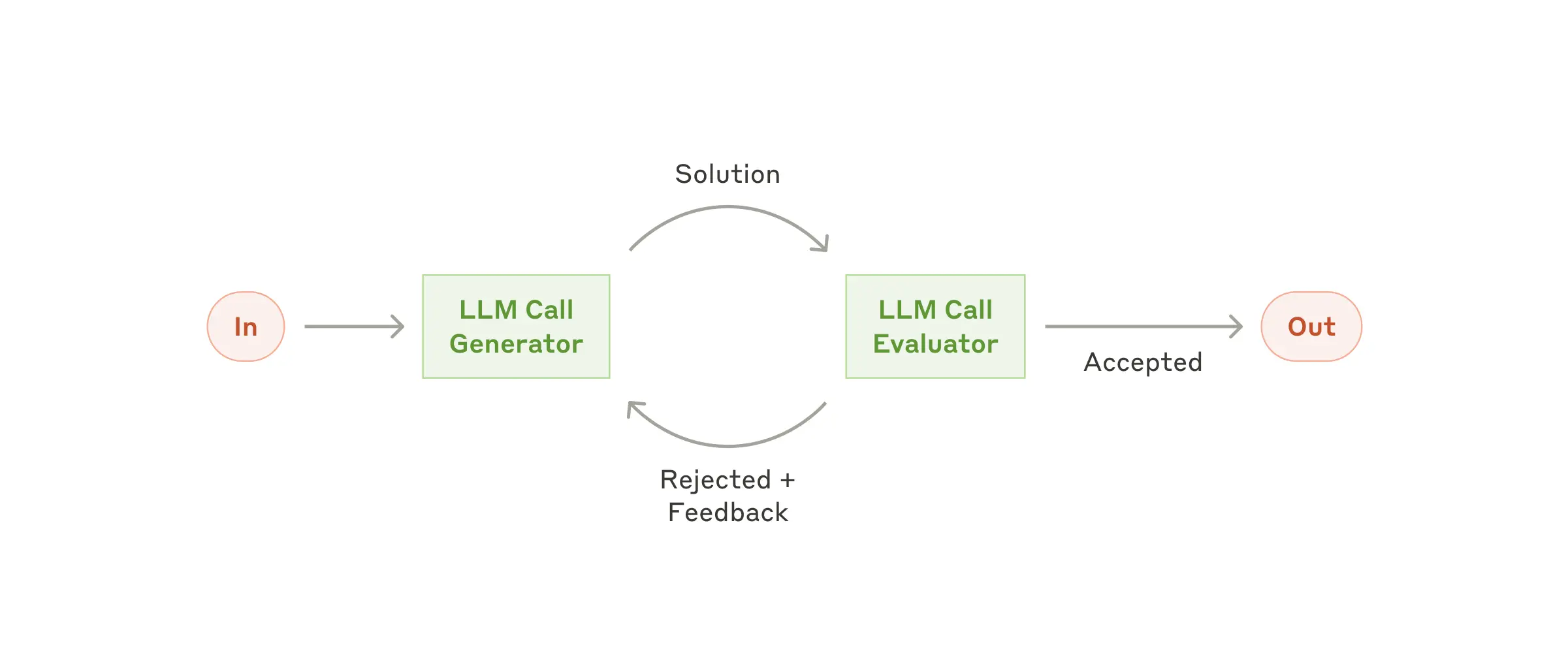
The Evaluator-Optimizer pattern implements a dual-LLM process where one model generates responses while another provides evaluation and feedback in an iterative loop, similar to a human writer's iterative refinement process. The pattern consists of two main components:
|
|
|
|
- **Generator LLM**: Produces initial responses and refines them based on feedback
|
|
- **Evaluator LLM**: Analyzes responses and provides detailed feedback for improvement
|
|
|
|
## How It Works
|
|
|
|
1. The generator LLM produces an initial solution for the given task
|
|
2. The evaluator LLM assesses the solution against quality criteria
|
|
3. If the solution passes evaluation, it's returned as the final result
|
|
4. If improvements are needed, feedback is incorporated into a new generation cycle
|
|
5. The process repeats until a satisfactory solution is achieved
|
|
|
|
```mermaid
|
|
graph TD
|
|
Task[Task Input] --> G[Generator LLM]
|
|
G --> E[Evaluator LLM]
|
|
E -->|PASS| Out[Final Output]
|
|
E -->|NEEDS_IMPROVEMENT| F[Feedback]
|
|
F --> G
|
|
```
|
|
|
|
## When to Use
|
|
|
|
This pattern is particularly effective when:
|
|
|
|
- Clear evaluation criteria exist for assessing response quality
|
|
- Iterative refinement provides measurable value to the output
|
|
- Tasks benefit from multiple rounds of critique and improvement
|
|
|
|
### Example Applications
|
|
|
|
- Literary translation requiring capture of subtle nuances
|
|
- Complex search tasks needing multiple rounds of searching and analysis
|
|
- Code generation where quality can be improved through systematic review
|
|
- Content creation requiring multiple drafts and specific improvements
|
|
|
|
## Implementation
|
|
|
|
The implementation uses Spring AI's ChatClient for LLM interactions and consists of:
|
|
|
|
```java
|
|
public class EvaluatorOptimizer {
|
|
public RefinedResponse loop(String task) {
|
|
// 1. Generate initial solution
|
|
Generation generation = generate(task, context);
|
|
|
|
// 2. Evaluate the solution
|
|
EvaluationResponse evaluation = evaluate(generation.response(), task);
|
|
|
|
// 3. If PASS, return solution
|
|
// 4. If NEEDS_IMPROVEMENT, incorporate feedback and generate new solution
|
|
// 5. Repeat until satisfactory
|
|
return new RefinedResponse(finalSolution, chainOfThought);
|
|
}
|
|
}
|
|
```
|
|
|
|
### Usage Example
|
|
|
|
```java
|
|
ChatClient chatClient = // ... initialize chat client
|
|
EvaluatorOptimizer agent = new EvaluatorOptimizer(chatClient);
|
|
|
|
// Process a task
|
|
RefinedResponse response = agent.loop(
|
|
"Create a Java class implementing a thread-safe counter"
|
|
);
|
|
|
|
// Access results
|
|
System.out.println("Final Solution: " + response.solution());
|
|
System.out.println("Evolution: " + response.chainOfThought());
|
|
```
|
|
|
|
## Customization
|
|
|
|
The pattern can be customized through:
|
|
|
|
1. **Custom Prompts**: Provide specialized prompts for generator and evaluator
|
|
```java
|
|
agent = new EvaluatorOptimizer(
|
|
chatClient,
|
|
customGeneratorPrompt,
|
|
customEvaluatorPrompt
|
|
);
|
|
```
|
|
|
|
2. **Default Templates**: Modify the default prompts for common use cases
|
|
- `DEFAULT_GENERATOR_PROMPT`: Template for solution generation
|
|
- `DEFAULT_EVALUATOR_PROMPT`: Template for solution evaluation
|
|
|
|
## Response Formats
|
|
|
|
### Generation Response
|
|
```json
|
|
{
|
|
"thoughts": "Brief description of approach",
|
|
"response": "Actual solution content"
|
|
}
|
|
```
|
|
|
|
### Evaluation Response
|
|
```json
|
|
{
|
|
"evaluation": "PASS|NEEDS_IMPROVEMENT|FAIL",
|
|
"feedback": "Detailed feedback for improvement"
|
|
}
|
|
```
|
|
|
|
## Dependencies
|
|
|
|
- Spring AI
|
|
- Spring Boot
|
|
- Java 17 or later
|
|
|
|
## References
|
|
|
|
- [Building Effective Agents (Anthropic Research)](https://www.anthropic.com/research/building-effective-agents)
|