 9f8cb92aa9
- Remove redundant workflow suffix from agentic pattern names and related classes
- Update documentation to reflect pattern name changes
86 lines
2.8 KiB
Markdown
86 lines
2.8 KiB
Markdown
# Orchestrator-Workers Workflow Pattern
|
|
|
|
This project demonstrates the Orchestrator-Workers workflow pattern for building effective LLM-based systems, as described in [Anthropic's research on building effective agents](https://www.anthropic.com/research/building-effective-agents).
|
|
|
|
|
|
|
|
## Overview
|
|
|
|
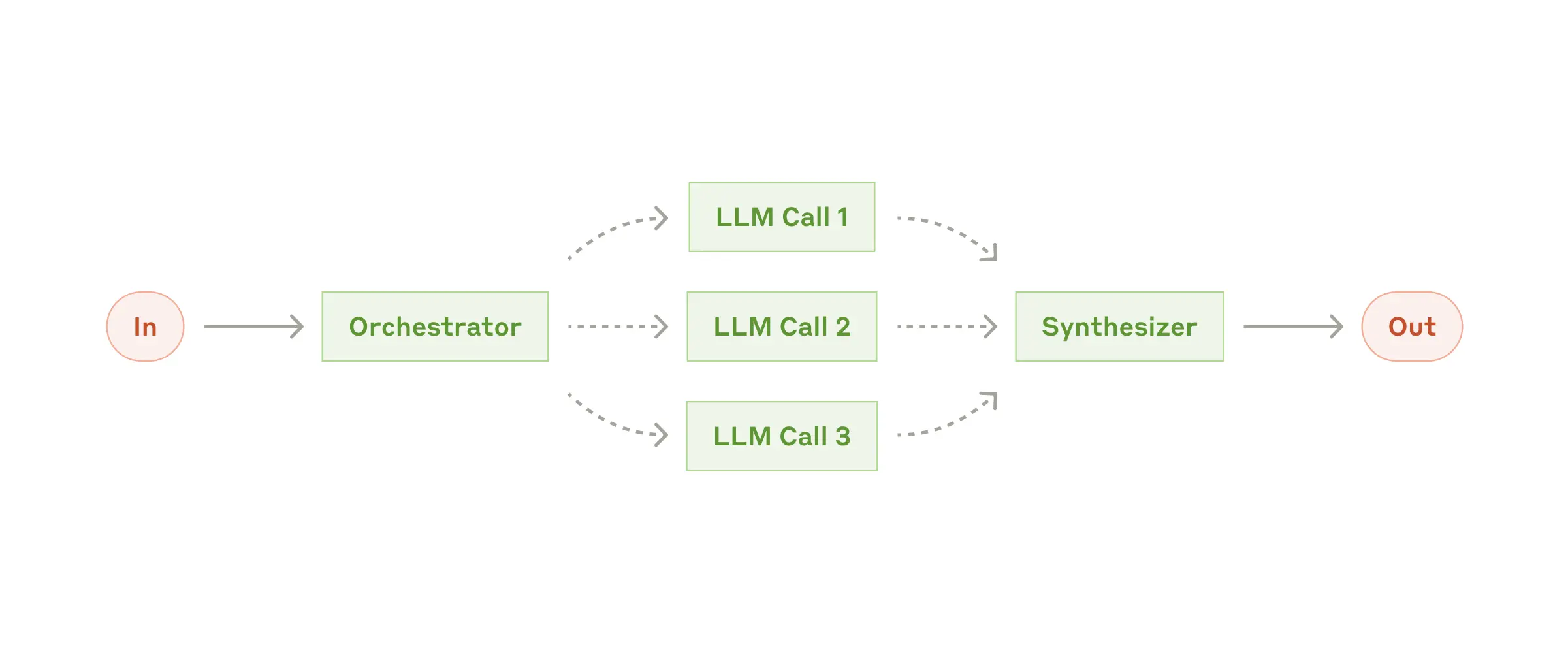
The Orchestrator-Workers pattern is a flexible approach for handling complex tasks that require dynamic task decomposition and specialized processing. It consists of three main components:
|
|
|
|
- **Orchestrator**: A central LLM that analyzes tasks and determines required subtasks
|
|
- **Workers**: Specialized LLMs that execute specific subtasks
|
|
- **Synthesizer**: Component that combines worker outputs into a final result
|
|
|
|
## When to Use
|
|
|
|
This pattern is particularly effective for:
|
|
|
|
- Complex tasks where subtasks can't be predicted upfront
|
|
- Tasks requiring different approaches or perspectives
|
|
- Situations needing adaptive problem-solving
|
|
- Tasks benefiting from specialized processing
|
|
|
|
|
|
## Implementation
|
|
|
|
The implementation uses Spring AI's ChatClient for LLM interactions and consists of:
|
|
|
|
```java
|
|
public class OrchestratorWorkers {
|
|
public WorkerResponse process(String taskDescription) {
|
|
// 1. Orchestrator analyzes task and determines subtasks
|
|
OrchestratorResponse orchestratorResponse = // ...
|
|
|
|
// 2. Workers process subtasks in parallel
|
|
List<String> workerResponses = // ...
|
|
|
|
// 3. Results are combined into final response
|
|
return new WorkerResponse(/*...*/);
|
|
}
|
|
}
|
|
```
|
|
|
|
### Usage Example
|
|
|
|
```java
|
|
ChatClient chatClient = // ... initialize chat client
|
|
OrchestratorWorkers agent = new OrchestratorWorkers(chatClient);
|
|
|
|
// Process a task
|
|
WorkerResponse response = agent.process(
|
|
"Generate both technical and user-friendly documentation for a REST API endpoint"
|
|
);
|
|
|
|
// Access results
|
|
System.out.println("Analysis: " + response.analysis());
|
|
System.out.println("Worker Outputs: " + response.workerResponses());
|
|
```
|
|
|
|
## Customization
|
|
|
|
The pattern can be customized through:
|
|
|
|
1. **Custom Prompts**: Provide specialized prompts for orchestrator and workers
|
|
```java
|
|
agent = new OrchestratorWorkers(
|
|
chatClient,
|
|
customOrchestratorPrompt,
|
|
customWorkerPrompt
|
|
);
|
|
```
|
|
|
|
2. **Default Templates**: Modify the default prompts for common use cases
|
|
- `DEFAULT_ORCHESTRATOR_PROMPT`: Template for task analysis
|
|
- `DEFAULT_WORKER_PROMPT`: Template for worker processing
|
|
|
|
## Dependencies
|
|
|
|
- Spring AI
|
|
- Spring Boot
|
|
- Java 17 or later
|
|
|
|
## References
|
|
|
|
- [Building Effective Agents (Anthropic Research)](https://www.anthropic.com/research/building-effective-agents)
|